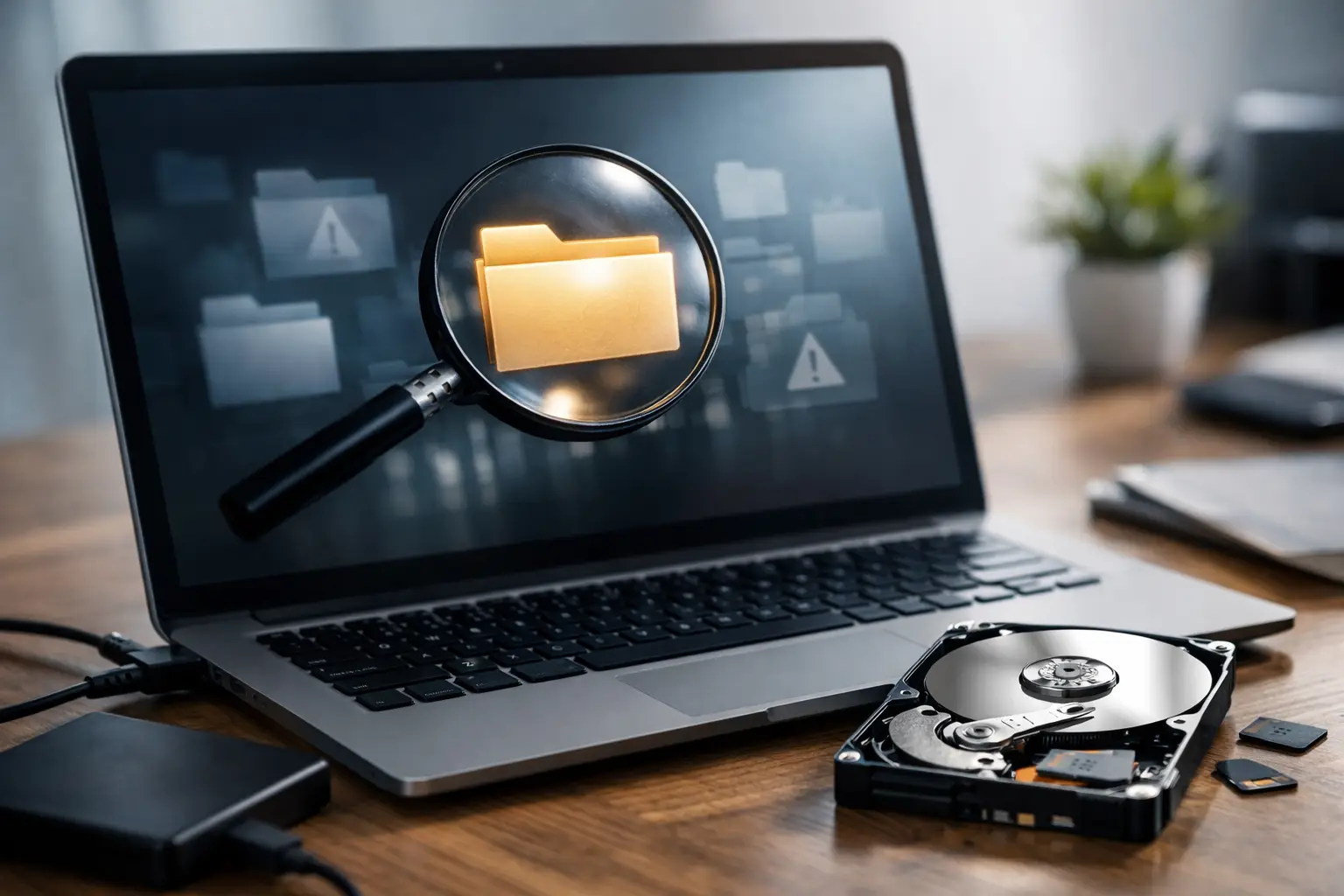
A missing dissertation, an unresponsive laptop before a meeting, or a coffee spill on the train can turn an ordinary day into a real problem. This laptop data recovery guide explains the safest next move, because the actions you take in the first few minutes can make the difference between recovering your files and losing them for good.
Start by stopping the damage
When files disappear, the natural reaction is to keep clicking, restarting, downloading recovery apps and trying every fix you can find. That can be risky. If the drive is failing or files were deleted, continued use may overwrite the data that recovery software or a technician could otherwise retrieve.
Save any open work you can still access, then stop using the laptop for non-essential tasks. Do not install new software, copy large files, update the operating system or run a factory reset. These actions write new data to the drive and can reduce the chances of a successful recovery.
If you hear repeated clicking, grinding or beeping from a traditional hard drive, switch the laptop off. The same applies if the device has been dropped, exposed to liquid, smells hot or will not charge properly. Physical faults need careful diagnosis, not repeated attempts to power the device on.
Laptop data recovery guide: identify what has happened
The right approach depends on the symptom. A file that was accidentally deleted is very different from a laptop that no longer starts.
Files have been deleted or folders are missing
First, check the Recycle Bin on Windows or Bin on a Mac. Also look in your cloud storage's deleted files area if you use services such as OneDrive, iCloud Drive, Google Drive or Dropbox. Many services keep deleted files for a limited period, which makes this the quickest and lowest-risk place to start.
If the folder is not there, avoid saving anything else to the laptop. Deleted files are often not removed immediately. Instead, the space they occupied is marked as available. Once new files are written over that space, recovery becomes much harder, particularly on modern SSDs.
The laptop starts, but the drive or files are inaccessible
You may see messages saying the drive needs formatting, access is denied, a user profile cannot be loaded, or a folder appears empty. Do not format the drive just because the laptop suggests it. Formatting can complicate recovery, even when the drive itself is still healthy.
This could be a file-system fault, a Windows or macOS issue, file corruption, a faulty cable or an early sign of drive failure. A proper assessment should establish whether the problem is software-related or whether the storage device is deteriorating.
The laptop will not turn on
A laptop that will not power on does not automatically mean the files are gone. The fault may be with the battery, charging port, screen, keyboard, motherboard or operating system rather than the drive. In many cases, the data can still be accessed once the fault is repaired or the storage is read safely using specialist equipment.
Avoid taking the casing apart unless you are confident with your model and have the correct tools. Modern laptops can use encrypted storage, delicate connectors and soldered SSDs. A rushed attempt can damage components that were not part of the original fault.
There has been a liquid spill or impact
Turn the laptop off immediately, unplug the charger and disconnect any accessories. Do not keep pressing the power button to see if it still works, and do not use a hairdryer or place it on a radiator. Heat can cause further damage, while powering a wet device can create short circuits.
Place it on a dry, absorbent surface and arrange an assessment as soon as possible. Liquid corrosion can continue after the initial spill, so speed matters. With a dropped laptop, treat unusual noises, a loose hinge, screen faults and intermittent start-up as warning signs rather than annoyances to work around.
Be careful with DIY recovery software
Recovery software can be useful for a straightforward deletion on a healthy drive, especially if you stop using the laptop immediately. It is not a cure-all. It may not help when a drive is physically damaged, heavily encrypted, failing intermittently or affected by water damage.
There is another trade-off with SSDs. Many modern laptops use SSD storage, which is fast and reliable in normal use but can make recovery after deletion more time-sensitive. Features designed to maintain performance can permanently clear deleted data sooner than on older hard drives.
If you decide to try software, do not install it on the affected drive and do not recover files back onto that same drive. Use a separate storage device for the software and recovered files where possible. Stop if the laptop freezes, makes unusual sounds or the drive repeatedly disconnects.
Free tools can also reveal filenames without recovering usable documents, and some paid tools make optimistic promises before showing the final result. For valuable work, family photos, business documents or files needed for a deadline, a professional diagnosis is usually the safer first step.
Protect your privacy while recovering data
Your laptop may contain saved passwords, bank details, private photographs, work files and personal messages. Data recovery should never mean compromising your privacy.
Before handing a laptop over, make a note of the device password if it is needed to access an encrypted drive. If the laptop still works, sign out of sensitive accounts only if doing so will not prevent access to files you need recovered. Do not share banking PINs, online banking passwords or recovery codes with anyone.
Ask how your data will be handled, whether you will receive the recovered files on an external drive or secure transfer, and what happens to temporary copies after the work is complete. Clear answers are part of a trustworthy repair service.
When professional recovery is the sensible option
Professional help is particularly worthwhile when the data is irreplaceable, the laptop has suffered liquid or impact damage, the drive is not detected, the device asks to format storage, or you can hear mechanical noises. It is also a sensible choice if the laptop contains a work project, university submission or travel documents you need quickly.
A technician can assess the device, check whether the fault is with the storage or another component, and explain the realistic recovery options before work begins. Not every case has the same outcome. A healthy drive with accidentally deleted files may have a strong chance of recovery, while a severely damaged or overwritten SSD may have limited options. Honest advice matters more than unrealistic guarantees.
For central London customers, Best Tech Repair can assess laptop faults and data recovery needs at Piccadilly Circus Underground Station, helping you understand the issue without adding unnecessary delay to an already stressful day.
Once your files are back, make the next loss less likely
Recovery is a relief, but it is also a useful prompt to set up a simple backup routine. Keep important files in two places: your laptop and a separate backup, such as cloud storage or an external drive. For the files you cannot replace, use both. Cloud storage protects against a failed laptop, while an offline backup can help if an account is locked or files are accidentally changed online.
Turn on automatic backups, check that they are actually running, and keep your laptop updated once it is stable. If its battery, storage or charging behaviour has become unreliable, dealing with that fault early is usually cheaper and less stressful than waiting for complete failure.
The best time to protect your files is before something goes wrong. But if it already has, pause, avoid guesswork and get the right help quickly - your data may still be there.
