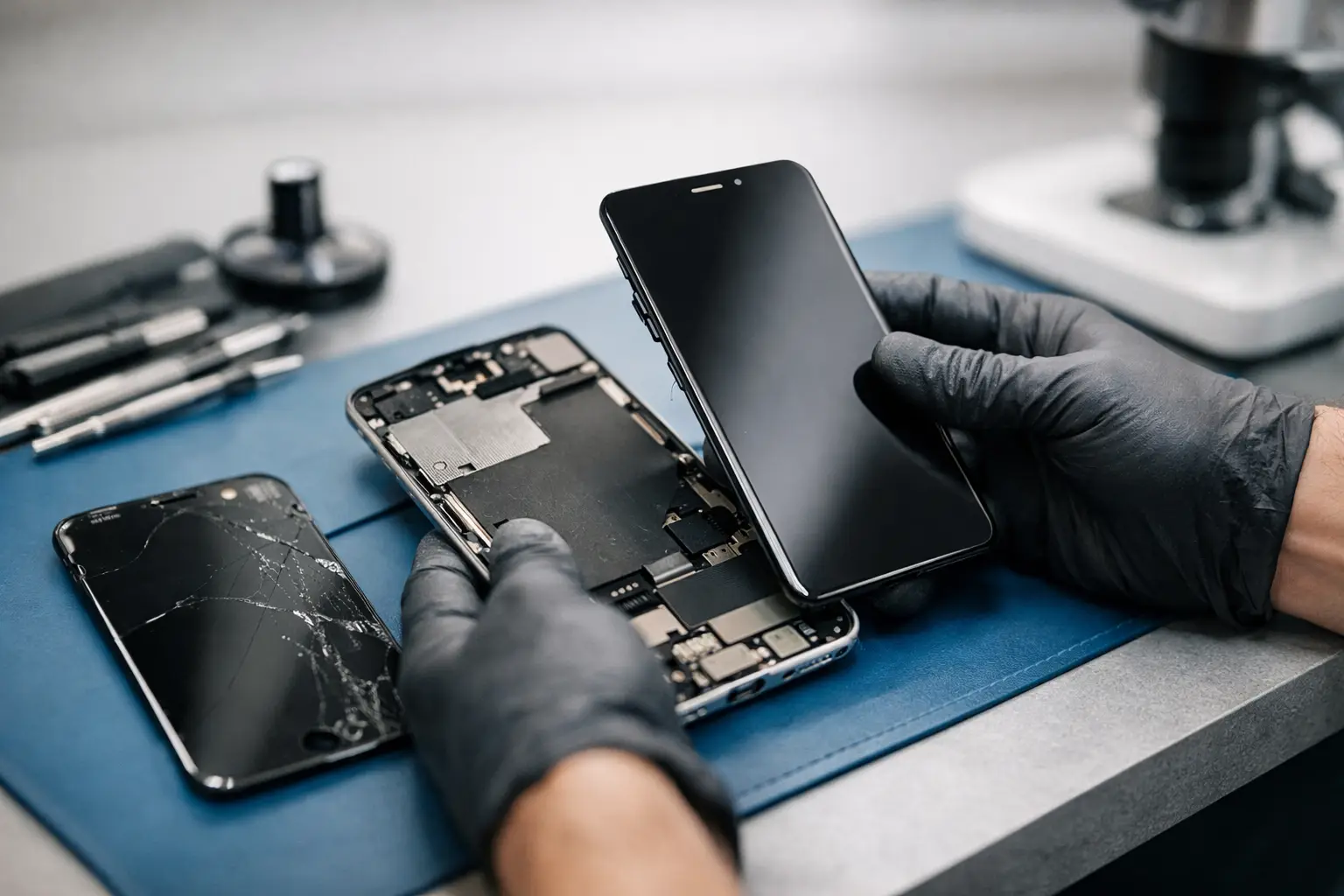
A cracked display is bad enough. What usually makes it worse is the next question - should you pay more for an official oem screen replacement, or is a standard replacement good enough?
If you use your phone, tablet or laptop every day for work, travel, banking and messages, the screen is not a minor part. It affects how the device looks, feels and responds every time you pick it up. That is why the type of replacement used matters more than many people realise.
What an official OEM screen replacement actually means
OEM stands for Original Equipment Manufacturer. In simple terms, an official OEM screen replacement means the replacement screen is the same type of part used by the original brand, or supplied through an approved channel that matches the manufacturer standard.
That sounds straightforward, but in the repair world, the wording can get muddy. Some screens are high quality aftermarket parts. Some are refurbished originals. Some are pulled from donor devices. And some are genuinely official parts tied to the manufacturer’s repair programme. Those are not all the same thing, even if they are described in similar ways.
For customers, the real difference comes down to consistency. An official part is meant to match the original screen for fit, brightness, touch response, colour accuracy and overall finish. You are aiming for the closest possible result to how the device felt before it was damaged.
Why people ask for official OEM screen replacement
Most people are not interested in repair jargon. They just want the phone to feel normal again. That is usually the reason customers ask about official OEM screen replacement in the first place.
When a screen is poor quality, you notice it quickly. The glass may feel different under your finger. The brightness might be weaker outdoors. Colours can look slightly off. Touch sensitivity may lag or become less accurate near the edges. On some devices, Face ID, fingerprint recognition, stylus performance or automatic brightness can also be affected if the repair is not handled properly.
For someone commuting across London, replying to work messages between meetings, or using maps and contactless apps on the move, those small issues stop feeling small very quickly. A cheap screen can turn a repaired device into an annoying one.
The benefits of using the right screen
The biggest benefit is confidence. If the part is correct and the repair is done properly, you should not spend the next few weeks second-guessing the result.
A proper screen replacement can help preserve image quality, smooth touch performance and the correct fit against the frame. It can also reduce the risk of problems such as lifting edges, uneven backlighting or premature failure. On premium devices, especially newer iPhones, Samsung Galaxy models and high-end tablets, that difference is often more noticeable than people expect.
There is also the resale angle. If you plan to sell or trade in the device later, repair quality matters. Buyers are usually quick to spot a poor screen. Even if they do not know the technical details, they can tell when something feels off.
When it matters most
Not every repair decision is the same. Sometimes paying extra for an official part makes perfect sense. Sometimes it depends on the age and value of the device.
If your phone is relatively new, expensive or still central to your day-to-day routine, an official or like-for-like quality repair is usually the safer choice. The same goes if you are sensitive to screen quality and would notice changes in contrast, sharpness or responsiveness immediately.
If the device is older and you are simply trying to get a bit more life out of it, a good quality alternative screen may be a practical option. The key point is honesty. A repair shop should explain what part is being used, what standard it meets and what trade-off comes with each option.
Official OEM vs aftermarket screens
This is where price differences usually come from. Official parts are often more expensive because of supply, brand restrictions and the quality standard attached to them. Aftermarket screens can vary a lot. Some are decent. Some are poor. The problem is that two non-official screens can look similar on paper but perform very differently in real life.
A cheaper screen might save money upfront, but that saving can disappear if the display dims too quickly, stops responding properly or needs replacing again. On the other hand, not every non-official part is automatically bad. There are cases where a quality compatible screen is a reasonable choice, particularly for older devices where the repair budget matters more than factory-level finish.
That is why the conversation should never be reduced to official good, aftermarket bad. The real question is what outcome you want from the repair and whether the part matches that expectation.
Questions worth asking before you book
You do not need to be a technician to avoid a poor repair. You just need clear answers.
Ask whether the screen is official OEM, refurbished original or aftermarket. Ask if features such as Face ID, fingerprint recognition, pen support or True Tone style display functions will still work as expected after the repair. Ask what warranty is included on the part and the fitting. Ask how long the repair will take and whether the price includes everything.
If the answer is vague, rushed or overly sales-driven, that is usually a warning sign. A reliable repair service should be comfortable explaining the difference without trying to confuse you.
Why fitting matters as much as the part
Even the best screen can be let down by poor workmanship. Screen replacement is not just about swapping glass. On many devices, the job involves careful disassembly, adhesive replacement, component transfer, testing and correct resealing.
If any of that is rushed, you can end up with dust under the screen, weak bonding, damaged flex cables or a display that does not sit properly in the frame. In some cases, water resistance can also be reduced after repair, even when quality parts are used. A good technician should be upfront about that rather than making promises that cannot be guaranteed.
This is one reason people choose established repair specialists rather than taking the cheapest quote they can find. Fast service is useful, but only if it is done right the first time.
Is official always the best choice?
Often, yes. Always, not necessarily.
If your priority is getting the closest match to the original display, official OEM is usually the best route. But there are situations where it may not be the most sensible one. If the device is several years old and the official repair cost is close to the value of the phone itself, many customers would rather choose a high-quality compatible screen and keep costs under control.
That does not mean settling for poor quality. It means matching the repair to the device, the budget and how long you expect to keep using it. A trustworthy repair service should help you weigh that up rather than pushing one answer for every customer.
Choosing a repair service in London
When you need a screen sorted quickly, convenience matters. But speed should come with proper advice, transparent pricing and realistic expectations.
If you are comparing repair shops, look for straightforward service information, clear turnaround times and a willingness to explain part options without hiding behind jargon. For busy London customers, same-day availability can make a real difference, especially when your phone is also your ticket wallet, sat nav, camera and work device. That is where an experienced local service like Best Tech Repair can make the process less stressful, particularly if you need a quick repair in central London without guessing what quality you are getting.
The bottom line on screen quality
A screen replacement is not just about making a crack disappear. It is about restoring the part of your device you use more than anything else.
An official OEM screen replacement can be the right choice if you want the closest possible match to the original display, especially on newer or higher-value devices. If budget is the main concern, a good alternative may still do the job well, but only if the repairer is honest about what you are getting.
The best repair decisions are rarely based on price alone. They come from knowing the part, understanding the trade-offs and choosing a service that treats your device like something you actually rely on every day.
If your screen is damaged, do not just ask how much the repair costs. Ask what kind of screen you are paying for, and whether it will still feel right once it is back in your hand.
