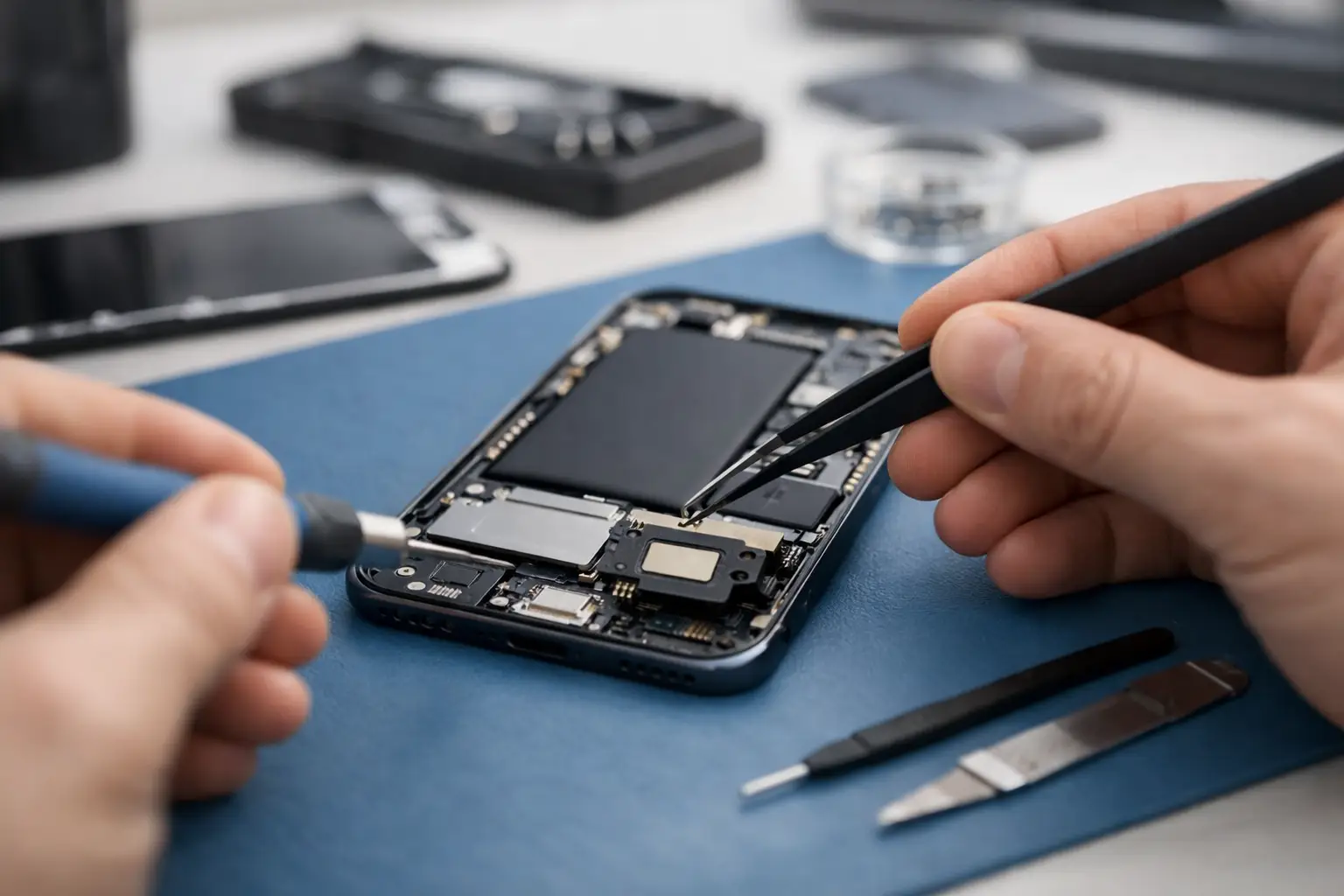
When your phone suddenly sounds muffled on a call, crackles during voice notes, or goes almost silent when a video is playing, it quickly becomes more than a minor annoyance. A phone speaker repair service is often the fastest way to get back to normal, especially if you rely on your device for work, travel, messages and everyday calls.
Speaker faults are easy to put off because the phone still seems usable at first. You can switch to headphones, use speakerphone less often, or keep the volume at full just to hear anything. The problem is that speaker issues rarely improve on their own. In many cases, they either stay the same or get worse with time, especially if dust, moisture or internal damage is involved.
Signs you may need a phone speaker repair service
Not every sound problem means the speaker itself has failed, but there are a few clear warning signs. If calls sound distorted through the earpiece, media playback is unusually quiet, or audio cuts in and out, the speaker may be damaged or obstructed. Crackling is another common symptom, particularly after drops or exposure to moisture.
Sometimes the fault shows up in only one part of the phone. You might hear music through the bottom loudspeaker but struggle to hear callers through the top earpiece. Or the opposite happens - calls sound normal, but videos and ringtones are barely audible. That distinction matters because phones use different speaker components for different jobs, and the right repair depends on which part has failed.
There are also cases where the issue is not the speaker at all. Software glitches, Bluetooth settings, dirt in the grille or a damaged audio circuit can all affect sound. That is why proper diagnosis matters. A good repair service does not guess - it checks the fault before replacing parts.
What causes phone speaker problems?
Daily use is one of the biggest reasons. Phones spend a lot of time in pockets, bags and hands, and the speaker openings collect dust, lint and general debris surprisingly quickly. That build-up can block sound and make your phone seem quieter over time.
Accidental damage is another major cause. A drop can loosen internal components or damage the speaker module outright, even if the screen is still intact. Water exposure is also common. You do not need to drop your phone in a sink for trouble to start. Rain, condensation, spills and steam can all affect internal parts.
Wear and tear plays a part as well. If a phone has been used heavily for years, speaker performance can deteriorate. This is especially noticeable on devices that have already had previous repairs or have been exposed to repeated impact.
Then there is the software side. A buggy update, app conflict or sound setting issue can make it seem like the speaker is broken when the hardware is actually fine. That is why a proper check saves time and money. Replacing a working speaker will not solve a software fault.
How a phone speaker repair service should diagnose the issue
A reliable repair starts with testing, not assumptions. The technician should check how the phone behaves during calls, media playback, notifications and speakerphone use. They may also test microphones, charging and other related functions, because faults can overlap after impact or moisture exposure.
Visual inspection matters too. Dirt packed into a speaker grille can sometimes cause more trouble than people expect. In some cases, careful cleaning is enough. In others, the grille is clear but the speaker underneath has already been damaged.
If the phone has signs of liquid exposure, diagnosis becomes more important. Moisture can affect more than one component, and the speaker may only be part of the issue. In those situations, a quick repair might not be the right repair. Honest advice matters more than rushing the device through the bench.
Phone speaker repair service vs quick DIY fixes
It is tempting to try internet fixes first. Restart the phone, adjust settings, disconnect Bluetooth, clean the speaker with a brush or test sound through different apps. Those basic checks can help, and they are worth trying when the fault first appears.
The risk comes when DIY moves beyond safe troubleshooting. Using sharp tools, liquids, compressed air at the wrong pressure or home repair kits can make the problem worse. Speaker meshes are delicate, and modern phones are tightly built. A small mistake can damage connectors, seals or nearby components.
There is a difference between sensible checking and do-it-yourself repair. If simple steps do not solve the issue, professional testing is usually the safer route. It avoids wasted time and reduces the chance of turning a speaker problem into a larger hardware repair.
How long does speaker repair usually take?
In many cases, speaker repairs can be completed the same day, depending on the device model and the exact fault. Straightforward speaker replacement is often quicker than people expect, especially when the part is in stock and there is no extra internal damage.
That said, not every repair follows the same timeline. If the phone has liquid damage, a bent frame, previous poor-quality repairs or multiple faults, the job may take longer. Some phones are also more complex to open and reassemble than others. Foldable models and premium handsets can require more care and more time.
A trustworthy service should tell you what they know early on - what the likely issue is, whether more testing is needed, how long the repair should take, and what it is expected to cost. Clear information matters just as much as the repair itself.
What to expect from a good repair centre
You should expect transparent pricing, a proper diagnosis and an explanation you can understand without a technical translation service. If a repair shop immediately jumps to replacing parts without testing the phone, that is not a great sign.
A dependable service will also be realistic. Sometimes the speaker itself is the only issue and the fix is simple. Sometimes the phone has board-level damage, liquid corrosion or more than one failed component. The right answer is not always the fastest or cheapest one, but it should always be honest.
Quality parts and careful fitting matter too. Poor repairs can leave phones with weak sound, loose seals or new problems that were not there before. That is why workmanship counts. The aim is not just to make the phone produce sound again. It is to restore proper performance and avoid repeat faults.
For busy London customers, convenience matters as well. If you are trying to sort out a speaker fault between work, commuting and everything else, being able to book ahead or walk in for fast assessment makes a real difference. That is one reason central services such as Best Tech Repair, based inside Piccadilly Circus Underground Station, are useful when time is tight.
When it is worth repairing - and when it depends
Most speaker problems are worth repairing if the rest of the phone is in good condition. A speaker replacement is usually far more cost-effective than replacing the handset, particularly on newer models.
If the phone is already struggling with several issues - poor battery life, a cracked screen, charging faults and speaker failure together - the decision becomes more case by case. Repair can still make sense, but only if the total cost is reasonable for the age and value of the device.
This is where good advice helps. You want a repairer who will tell you whether the phone is worth fixing, not one who pushes unnecessary work. Sometimes the best outcome is a simple speaker repair. Sometimes it is a wider repair plan. Sometimes it is honest advice that your money is better spent elsewhere.
Preventing future speaker damage
No phone stays perfect forever, but a few habits help. Keep the device away from moisture where possible, avoid using it in steamy bathrooms, and do not ignore minor sound issues in the hope they will pass. Small faults are usually easier to deal with than major ones.
A decent case helps with drops, though it will not stop every internal fault. Regular cleaning around the speaker area can also reduce dirt build-up, but it needs to be done carefully. Gentle cleaning is fine. Aggressive poking is not.
If your phone starts sounding quieter, distorted or inconsistent, get it checked sooner rather than later. Speaker faults are often straightforward when caught early, and far more inconvenient when left to drag on.
A phone does not need to be completely silent to need attention. If the sound is no longer clear, reliable or loud enough for normal use, that is usually your sign to stop working around the problem and get it fixed properly.
