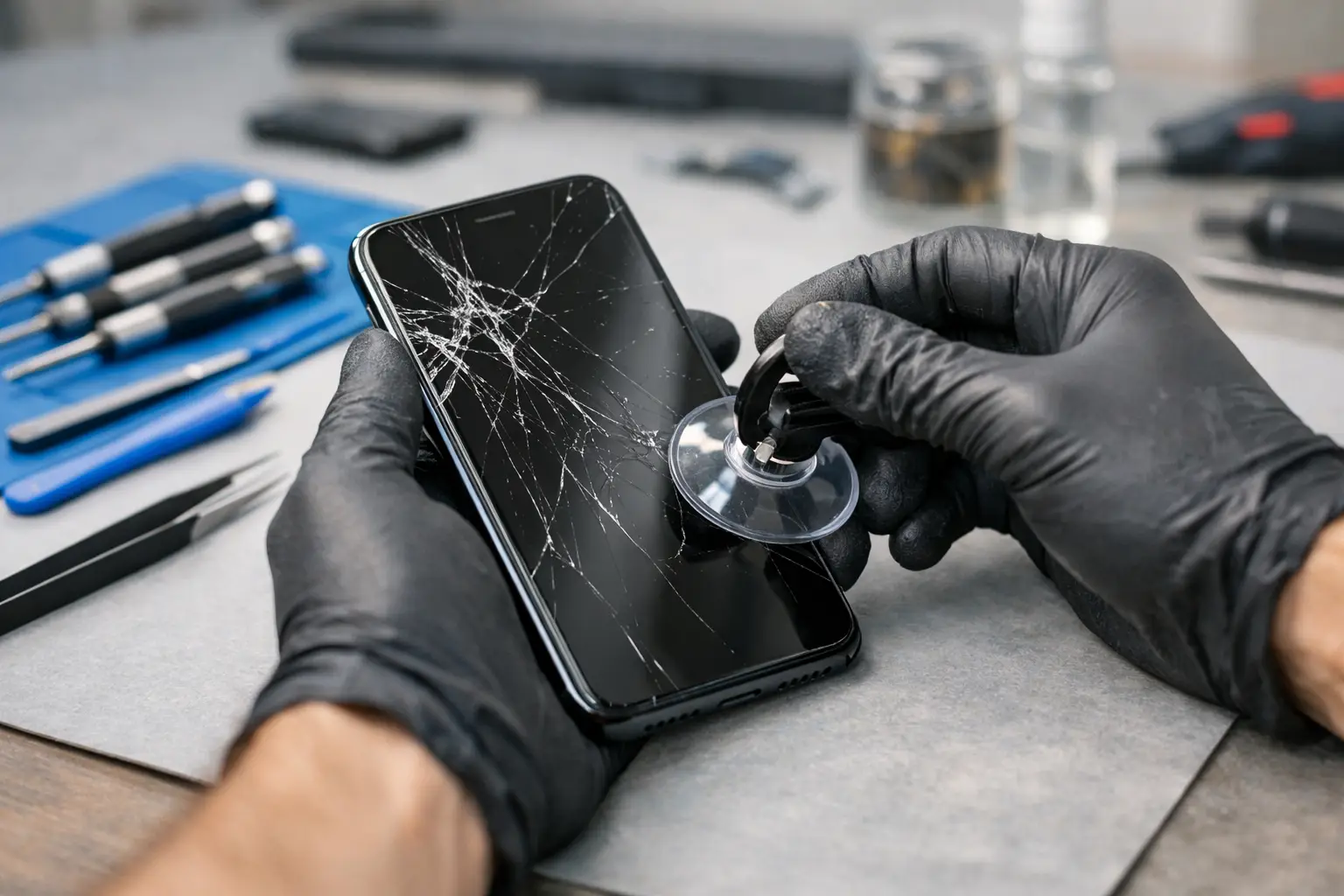
That small crack rarely stays small for long. One drop on the pavement, one knock in your bag, and suddenly your phone is harder to use, harder to trust, and a lot easier to damage further. If you are searching for how to fix cracked phone screen problems, the first thing to know is this - not every cracked screen should be handled the same way.
Some screens are only scratched on the surface. Some still work but have weakened glass. Others have deeper damage affecting the display, touch response, or the phone's water resistance. The right fix depends on what has actually broken, how quickly you need the phone back, and whether you want a short-term patch or a proper repair done right the first time.
How to fix cracked phone screen without making it worse
Before you do anything else, stop pressing on the damaged area. A lot of people make the crack worse by testing it repeatedly, picking at loose glass, or carrying on using the phone as normal. Even if the display still lights up, the structure of the screen may already be compromised.
Start by checking how serious the damage is. If the phone still responds properly to touch, the image looks normal, and there are no black spots, lines, flickering areas, or signs of swelling, you may be dealing with broken outer glass only. If the screen has dead zones, false touches, ink-like blotches or a display that cuts in and out, the damage is more than cosmetic.
If there are loose shards, place a screen protector or clear tape over the screen as a temporary safety measure. This is not a fix, but it can help prevent cuts and stop pieces of glass falling away before repair. Keep the phone dry, avoid pressure in your pocket or bag, and back up your data as soon as possible.
That last step matters more than many people realise. A cracked screen can fail completely days after the initial drop, especially if moisture gets in or the phone takes another knock.
When a cracked screen is safe to use and when it is not
A hairline crack in one corner is very different from a screen that is splintering across the centre. If the crack is minor and the phone is otherwise working normally, you may be able to keep using it briefly while you arrange repair. Briefly is the key word.
Once the glass is cracked, the screen is weaker. Your phone becomes more vulnerable to pressure damage, water ingress and dirt working its way inside. On many modern handsets, the screen assembly is a tightly bonded unit. When that seal is compromised, the risk goes beyond appearance.
Stop using the phone immediately if the battery appears swollen, the device is overheating, the screen is lifting from the frame, or there is exposed internal hardware. In those cases, the problem may no longer be just the screen.
Can you repair a cracked phone screen yourself?
Technically, yes. In practice, it depends on the phone, the tools, and your experience.
DIY screen repair videos can make the job look straightforward, but modern smartphones are built with very fine tolerances. Opening the device without damaging flex cables, face sensors, fingerprint readers, front cameras or the frame takes care and the right equipment. Some models are far more forgiving than others. Older phones with simpler construction can be easier to work on, while newer premium devices are usually much riskier.
There is also the question of parts quality. A cheap replacement screen may fit poorly, have dull brightness, weak touch sensitivity, poor colour accuracy or fragile glass. Even when the phone turns back on, the result may not feel like your original device.
DIY can make sense if you are repairing an older handset, you accept the risks, and the phone is not critical for work, travel or day-to-day use. If you rely on the device, want to keep face recognition or fingerprint features working properly, or simply need it sorted quickly, professional repair is usually the better route.
Temporary fixes versus proper screen replacement
People often look for quick tricks online - toothpaste, glue, resin kits or home polishing methods. These do not fix a cracked screen. At best, they can make tiny surface marks less noticeable for a short time. At worst, they push debris into the damage, affect touch performance, or make later repair more difficult.
A cracked screen is usually solved in one of two ways. The first is full screen replacement, where the damaged assembly is removed and replaced with a new one. The second, on certain devices and in certain repair environments, is glass-only refurbishment. For most walk-in customers, full screen replacement is the practical and reliable option because it restores both appearance and usability more predictably.
If your display has black spots, lines, touch issues or missing image, replacement is almost always the answer. There is no household method that will reverse that kind of damage.
What happens during a professional cracked screen repair
A proper repair starts with diagnosis, not guesswork. An experienced technician checks whether the issue is limited to the screen or whether the impact has affected the frame, battery, cameras or internal connectors as well.
The device is then opened using the correct tools and heat control for that model. The damaged screen is removed carefully, adhesive is cleaned away, the new screen is fitted, and the phone is tested before final sealing. Good repair work is not just about fitting a part. It is about making sure touch response, brightness, speakers, cameras and charging all still perform as they should afterwards.
This is where workmanship matters. A rushed repair can leave dust under the display, poor alignment, weak adhesive or reduced water resistance. A good one gives you a phone that feels properly restored, not patched up.
How much does it cost to fix a cracked phone screen?
The honest answer is that it varies. Brand, model, screen type and part quality all affect price. An older budget handset will usually cost less to repair than a recent iPhone, Samsung Galaxy or Google Pixel with an OLED display.
The cheapest quote is not always the best value. If a low price means poor-quality parts, weak fitting or repeat failure, you can end up paying twice. What most people really want is clear pricing, quality parts and a repair that lasts.
If your phone is very old or has several faults at once, repair may not always be the smartest choice. But if the device is otherwise working well, replacing the screen is often far cheaper than buying a new phone and setting everything up again.
How to choose where to fix a cracked phone screen
When deciding where to take your device, look for a repair service that is clear about turnaround times, pricing and what is included. Convenience matters, especially if your phone is essential for work, travel, banking and day-to-day life.
For many people in central London, speed is just as important as cost. A same-day repair can mean the difference between a stressful day offline and getting back to normal quickly. If you are commuting through town or need a repair without a long wait, using a local specialist in a convenient spot can save a lot of hassle. Best Tech Repair, based inside Piccadilly Circus Underground Station, is set up for exactly that kind of urgent, practical fix.
It also helps to choose a shop that works on a wide range of devices and does not overcomplicate the advice. You should be told plainly whether the screen can be replaced, how long it will take, and whether there are any other issues to be aware of.
Aftercare once your screen is repaired
A new screen is not indestructible, so a little prevention goes a long way. Use a decent case with raised edges, fit a quality screen protector, and avoid putting the phone in the same pocket or compartment as keys. It sounds obvious, but a lot of repeat damage comes from everyday habits rather than dramatic drops.
If you are upgrading cases, choose one that protects the corners well. Corner impact is one of the most common causes of cracked glass. And if your phone has already been repaired once, it is worth treating it a bit more carefully than before.
A cracked screen is one of those problems people try to live with for too long. If your phone is already harder to use, or you are worried the damage will spread, getting it checked early usually saves time, stress and the risk of a bigger repair later.
